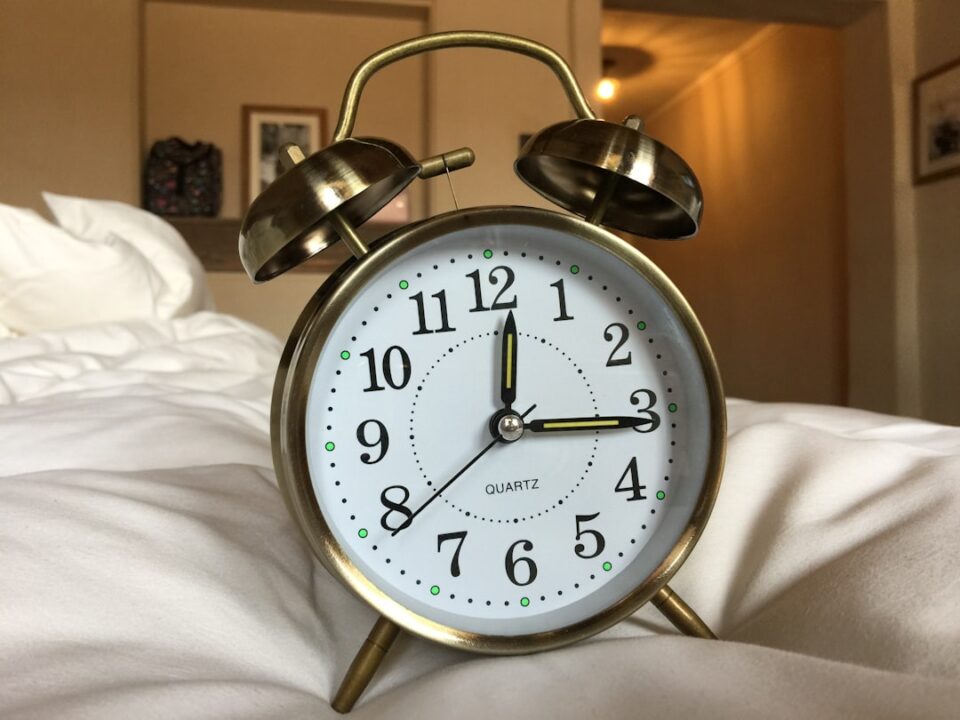
better sleep habits usually fail for a simple reason. The plan is too ambitious for a tired person. People talk about a perfect bedtime, a perfect room, and a perfect mind, then act surprised when the whole thing falls apart after a long day. What works in real life is smaller, softer, and easier to repeat. This article looks at the pieces that actually shape an evening, from light and food to screens, stress, and the room you sleep in. If you want a broader wellness starting point, the InHealthToday homepage is a useful place to explore more practical guides.
The point is not to build a ceremonial night routine that looks good in a notebook and fails by Thursday. The point is to make the next hour easier, then the hour after that, then the first minutes of the morning. That is how better sleep habits start to feel ordinary instead of fragile.
You do not need a perfect personality for this. You need a few reliable cues that tell your body the day is closing. Once those cues become familiar, the evening asks less of your willpower.
How better sleep habits begin before the bedroom
Most people think the bedroom is where sleep begins. I do not think that is true. The bedroom is where the results show up. The real work starts earlier, when the day is still noisy and your mind is still carrying unfinished pieces of it. If you wait until your head hits the pillow to change gears, you are asking for a hard transition. That is why so many nights feel like a wrestling match with your own thoughts.
The easier move is to treat the last part of the evening as a landing sequence. I like that phrase because it sounds less dramatic than a routine and more realistic than self-discipline. A landing sequence can be simple. Put the work away at a clear time. Dim the lights. Move the phone out of reach. Choose one small thing that marks the shift. The details matter less than the repetition.
Think about the signals your day sends. If dinner happens late, if the laptop stays open, if the room stays bright, your body gets mixed messages. If dinner ends, screens slow down, and the room quiets, the message is cleaner. That is the real benefit of better sleep habits. They reduce interpretation. Your body does not have to guess what comes next.
This is also why the evening should not be built around punishment. People often make sleep feel like a rule book. No fun. No light. No movement. No life. That approach rarely lasts. A gentler approach works better because it gives you something to continue on a stressful Wednesday, not just on an ideal Sunday.
The first shift is usually mental. Ask, what is the smallest signal that tells me the day is closing? For one person it is changing clothes. For another it is washing the dishes. For someone else it is a short walk after dinner. The signal itself is not magical. Its job is to become familiar. Familiar things are easier to trust.
Set a smaller target for the evening
A lot of people get stuck because they aim too high. They want a perfect wind-down, a calm mind, a spotless kitchen, and an early bedtime, all at once. That kind of plan sounds impressive and fails quickly. A smaller target is easier to hold. Instead of trying to fix the entire night, choose one clear outcome, such as getting the room dimmer by a certain time or putting the phone on charge outside the bed area.
Smaller targets work because they respect the fact that evenings are messy. Some nights run long. Some nights bring family needs, late work, or a train that gets you home later than you planned. A realistic goal survives those changes. It does not need the whole world to cooperate. It only needs one or two habits you can still do even when the rest of the evening is imperfect.
I find it helpful to use a three-part check. Did I lower the noise level? Did I lower the light level? Did I lower the number of decisions left for later? Those are simple questions, but they reveal a lot. If all three are moving in the right direction, the night is probably set up well enough. If one of them is off, that is fine. You can still adjust the others.
This is also where many people overcomplicate things with tracking apps and elaborate experiments. Data can be useful, but it can also become another task. If you are already tired, a simple yes or no is often enough. Did I create a softer evening than yesterday? That is a more useful question than chasing a flawless score.
The smaller the target, the more likely it is to become part of your normal life. And normal is the real win. Sleep routines do not need to look impressive from the outside. They just need to be available when your brain is at half power and your patience is thin.
A practical rule I like is to choose one anchor habit and one support habit. The anchor might be shutting the laptop at the same time most nights. The support might be turning off overhead lights and using a lamp instead. Two habits are easier to remember than eight. They also give you more confidence, because you can still succeed even when the evening is uneven.
Light, sound, and temperature shape the night
If I could change only three things in a bedroom, I would start with light, sound, and temperature. Those three shape how the body reads the room. Bright light keeps the evening feeling active. Noise keeps the mind alert for no good reason. A room that is too warm or too cold keeps attention on the body instead of letting it relax.
Light is the easiest place to begin. I do not mean you have to turn the room into a cave. I mean the end of the day should look different from the middle of it. Use lamps instead of overhead lighting when you can. Keep screens dimmer. Let the room feel like it is slowing down. Even a small change in brightness can make the evening feel less restless.
Sound is trickier because real life is rarely silent. You may live near traffic, share a wall, or have house sounds you cannot control. The goal is not silence. The goal is predictability. A fan, a white noise machine, soft music, or earplugs can help if they make the room feel less jumpy. Some people sleep better with a little background sound because it covers random interruptions. That is fine. Use what lowers friction.
Temperature is another underused lever. A slightly cooler room often feels better than a warm one, especially if you are under heavy blankets. But there is no single perfect number. What matters is whether the room lets your body stop negotiating with itself. If you keep kicking off the covers, it may be too warm. If you keep curling up and shivering, it may be too cold. The body usually tells the truth if you pay attention.
These are not glamorous changes, but they are reliable. They make the room do some of the work for you. That matters because you do not want to rely only on self-control at night. Self-control gets tired. A well-set room does not need motivation. It just keeps being a quiet cue.
If you share your space with someone else, talk about the room as a system rather than a preference battle. Maybe one person likes a fan, another likes a heavier blanket, and both can be accommodated with small adjustments. Good sleep habits often survive because people make the environment easier for everyone, not because they win every detail.
Food and drinks shape the last two hours
People underestimate how much the last meal and the last drink of the day influence the way the night feels. I am not talking about strict rules or perfect timing. I am talking about noticing whether your body feels settled or busy. A huge late meal can make the evening feel heavy. Too much liquid right before bed can mean extra wake-ups. A strong cup of coffee too late in the day can keep the mind bright long after you wanted it to dim.
The useful question is not, what is forbidden? The useful question is, what makes the last two hours easier? For some people that means eating dinner a little earlier. For others it means choosing a lighter snack instead of a second full meal. For others it means stopping caffeine well before evening. The answer depends on your actual day, not on someone else’s ideal chart.
Hydration is a good example. You do not need to cut water off in a dramatic way. You just need to avoid making the last hour feel like a race between thirst and repeated trips to the bathroom. Spread your drinking across the day if you can. By night, you want enough comfort without turning sleep into a logistics problem.
Alcohol deserves a careful mention too, because it can look helpful early and unhelpful later. It may feel like it lowers tension at first, but the night can become less stable afterward. I am not making a moral argument here. I am simply saying that if your sleep feels choppy after drinking, that pattern is worth noticing.
The same goes for sugary snacks, spicy meals, or very rich food late at night. None of these are universally wrong. The question is whether they leave your body calm enough to settle. Your own notes are more useful than generic advice. If one habit repeatedly makes the night noisier, that is enough to pay attention.
A gentle evening rule is to move the last big decision about food earlier in the day. By the time you get tired, you should not also be improvising dinner, dessert, and snacks at the same time. Less improvisation usually means less friction. Less friction usually means the night feels more predictable.
Think of this section less as restriction and more as timing. Good timing makes ordinary choices feel better. You are not trying to build a perfect food system. You are trying to avoid giving your body extra work when it is already ready to slow down.
Move your body, then let it settle
Movement and rest are not enemies. In fact, people often sleep better when they have given their body some useful work during the day. The mistake is assuming that any movement at any time works the same way. It does not. A hard workout right before bed can leave you wired. A gentle walk after dinner can do the opposite. Timing and intensity matter more than the label on the activity.
During the day, movement helps clear some of the restlessness that accumulates when you sit too long. In the evening, the goal changes. You want movement that opens space, not movement that creates another surge of energy. A short walk, a few stretches, light mobility work, or an easy household task can help transition your body out of work mode. I like movement that feels almost unremarkable. It should lower noise, not create it.
If exercise is part of your routine, think about the relationship between effort and recovery. A demanding session late at night may still work for some people, especially if their schedule leaves no choice. But many people do better when the more intense work happens earlier. Then the evening can be simpler. You move, you shower, you cool down, and the body gets a clean signal that the active part of the day is ending.
There is another benefit here that people miss. Movement can help drain some of the mental static that builds up when you stare at screens all day. A walk around the block gives your eyes distance. Stretching gives your muscles a change of pace. Even carrying laundry or tidying the kitchen can remind your body that it is part of the evening, not just a head floating above a laptop.
The key is not to confuse movement with stimulation. If the activity leaves you energized in a way that delays the rest of the evening, it may belong earlier. If it leaves you looser, warmer, and a little quieter, it is probably doing the right job. You are looking for a soft landing, not a second wind.
One practical method is to use movement as a transition between roles. Work role ends. Walk role begins. Dinner role begins. Quiet role begins. That sequence can be more effective than telling yourself to simply relax. Bodies like transitions. They do not like abrupt commands.
Screens need boundaries, not moral panic
I do not think screens are the villain. I think unmanaged screens are the problem. The difference matters. Most people reach for a phone at night because it is the easiest way to avoid the feeling of being fully alone with their own thoughts. That is understandable. The issue is that the same device that gives you relief also keeps the evening active in the background.
The answer is not to act as if all screen use is bad. That usually creates a guilt loop. A better approach is to set boundaries that fit the way you actually live. Maybe the phone charges across the room. Maybe the last half hour is for reading, not scrolling. Maybe the brightness is lower. Maybe autoplay is off. Small changes add up because they change the rhythm of the evening.
It also helps to distinguish between different kinds of screen time. A calm TV show with the lights down is not the same as a fast feed full of alerts, comments, and breaking updates. A work email is not the same as music or a guided stretch session. The content matters. The way your attention is pulled matters. A screen that asks less from you is usually easier to live with at night.
One thing I have noticed is that many people do not need a total ban. They need a stopping point. Without one, the evening leaks away. Ten minutes becomes forty. Forty becomes ninety. Then the night feels stolen. A boundary does not have to be strict to be useful. It just has to be visible.
Try building a small replacement, not just a limitation. If the phone is out of reach, what goes in its place? A book. A paper list for tomorrow. A glass of water. A quiet podcast if that helps you settle. The replacement gives the habit somewhere to go. Otherwise the brain simply complains that something is missing.
The best screen boundary is one you can keep on a dull Tuesday. Not a perfect rule for an imaginary version of yourself. A good rule survives boredom, fatigue, and the need to unwind. That is why simple beats heroic here.
Give your mind somewhere to put the day
The body is only part of the picture. A lot of late-night restlessness comes from an overfull mind. Tasks remain unfinished. Conversations replay themselves. Tomorrow shows up too early. If you try to force sleep without giving the mind a place to set things down, it often keeps circling. The fix is not to think less on command. The fix is to create a container for the thinking.
A very practical tool is the short brain dump. Write down what is still open. Not a polished plan. Just the loose pieces. The message you need to send. The bill you need to pay. The thing you do not want to forget. Once those pieces are on paper, they stop floating quite so loudly. You are telling your mind, you do not need to hold this all night.
Another useful habit is naming the next step, not the whole project. If tomorrow feels huge, reduce it to the first action. Open the file. Make the appointment. Pack the bag. Put the shoes by the door. The brain gets calmer when it sees the beginning of a path. Unclear tasks are heavier than small clear ones.
Some people also benefit from a short ritual of closure. That might be a ten-minute tidy, a shower, a prayer, a quick journal entry, or a simple review of the next day. The point is to move from open loops to closed loops. You are not solving life. You are finishing the day in a way that feels coherent.
If your thoughts are tied to worry, it can help to separate facts from stories. Fact, I have a meeting tomorrow. Story, the meeting will go badly and the entire week will collapse. Once you notice the story, it becomes easier to leave it on the page. That is not denial. That is sorting.
For some people, the mind settles best when the evening includes a bit of low-stakes repetition. Folding laundry. Dishes. Preparing breakfast. The work is simple, the outcome is visible, and the brain gets proof that something has been completed. Completion matters. It lowers the sense that everything is still hanging in the air.
Build a bedroom that supports quiet
The bedroom should not feel like a second office, a storage room, or a place where attention fragments. It should feel like the part of the house that asks less from you. That does not require expensive furniture or a designer reset. It usually means removing small irritants. The pile on the chair. The charger tangled by the bed. The bright lamp that never gets dimmed. The random notifications still visible on the nightstand.
Start with what your eyes see when you walk in. Is the room visually calm or visually busy? A calm room is easier to settle into because it sends a simple message. This is where the day ends. If every surface looks like a task, the room keeps asking you to be alert. You do not need to turn your bedroom into a photo shoot. You just need fewer reminders of unfinished business.
Then look at the bed itself. Is it comfortable enough, clean enough, and easy enough to get into? Small comforts count. Sheets that feel okay. A pillow that supports your neck. Blankets that do not make you too hot. These things sound ordinary because they are ordinary. But ordinary comfort is what helps a room become trustworthy.
Storage matters more than decoration for most people. If the bedroom collects random items, the mind notices. A basket for loose things, a hook for clothes, a drawer for chargers, and a clear path around the bed can change how the room feels. You are not organizing for perfection. You are reducing friction.
Light and sound belong here again, because the room should support quiet instead of fighting it. A lamp you can actually reach. Curtains that make the room feel softer. A fan if you like one. Earplugs if they help. All of these are practical signals, and practical signals are powerful.
If you share the room, talk about the shared goal rather than the individual preference. The goal is not to win the room. The goal is to make it easier for both people to settle. That mindset saves a lot of unnecessary debate.
A 30-minute routine you can actually repeat
People often ask for a routine, but what they really need is a routine that survives a normal week. Here is a version that is simple enough to keep. It is not perfect. It is repeatable. That matters more.
- First 10 minutes, close loose tasks. Put away the laptop, reply to anything truly urgent, and write down the first thing for tomorrow.
- Next 10 minutes, lower stimulation. Dim lights, move the phone away from the bed, and choose one quiet activity.
- Final 10 minutes, settle the body. Wash up, stretch lightly, read a few pages, or sit with a cup of tea if that feels comfortable.
The point of the routine is not that every minute needs to be identical. The point is that the sequence stays familiar. Close. Lower. Settle. Those three verbs are easier to remember than a long checklist. They also leave room for real life. If one step gets shortened, the others can still hold the shape of the evening.
When I think about routines that last, I think about repetition without ceremony. A useful routine should feel almost boring. If it is too ornate, it dies when you are tired. If it is simple, you can keep it even on nights that are not ideal. That is why a thirty-minute routine can work better than a ninety-minute one. It asks less, so you are more likely to do it.
You can also tune the routine by season. Winter evenings may need more light control. Summer nights may need more attention to temperature. Busy work weeks may need a shorter version that still hits the important cues. The routine should serve the week you are actually living.
If you want a deeper reminder for this part of the process, the idea is not to control sleep directly. It is to build conditions that make rest more likely. That shift in language is useful because it keeps expectations realistic. Realistic habits last longer.
Some nights, the full routine will happen. Other nights, only the first and last steps will happen. That is still useful. Consistency is not the same thing as perfection. Consistency is the ability to return to the sequence without making a drama out of the miss.
What to do when the plan falls apart
It will happen. A late meeting runs over. A child needs something. You get home tired and annoyed. The room is messier than you wanted. The routine you planned feels out of reach. This is the moment when many people decide the night is ruined, then keep scrolling or snacking because the whole thing already feels lost. That reaction is common, but it is not the only option.
A better move is to downshift fast. Do the smallest version of the routine you still can. Put the phone aside. Turn one light down. Wash your face or brush your teeth. Write the next step for tomorrow. You are not trying to recover the whole evening. You are trying to change direction before the night gets fully away from you.
This is where flexibility matters. If you miss the ideal time, do not turn that into an excuse to abandon the entire night. Late is not the same as useless. A shortened routine is still a routine. It still sends a cue to your body that the active part of the day is ending.
There is also a useful emotional skill here. Do not turn one disrupted evening into a story about failure. Some nights are simply noisy. The question is not whether the evening was perfect. The question is whether you can still make it a little easier from this point forward.
I like to keep a fallback list in my head for nights like this. One lamp. One glass of water. One page of notes for tomorrow. One quiet stretch. One book. That is enough to keep the evening from becoming chaos. Minimal effort is still effort, and in this context, minimal effort often wins.
After a rough night, the goal the next morning is not punishment. It is reset. Look at what changed. Was the bedtime too late? Was the room too bright? Was the day too overloaded? That review should be practical, not harsh. The best adjustments come from noticing patterns, not scolding yourself.
How better sleep habits change across busy seasons
One reason people give up on better sleep habits is that they expect the habits to look the same every month. That is not realistic. Busy seasons are different from calm ones. Travel changes things. Family life changes things. Work deadlines change things. Your routine should bend without breaking, or it will disappear the moment life gets inconvenient.
During a heavy season, the routine may shrink. That is not failure. It is adaptation. Maybe the only reliable pieces are closing the laptop earlier, dimming the room, and keeping the phone away from the bed. That can still be enough for a while. Smaller habits keep the thread alive. Once the season eases, you can add more back in.
It also helps to think in layers. Some habits are core. Others are optional. A core habit might be setting a clear end to work. An optional habit might be a long journal session. When the calendar gets crowded, protect the core first. The optional pieces are nice, but they should not become the reason the whole system collapses.
Travel is a good example. Hotel rooms, time changes, strange beds, and late dinners all make the evening feel different. In those cases, the goal is not to recreate home perfectly. It is to borrow a few familiar cues. Same tea. Same reading habit. Same phone rule. A small piece of familiarity can keep the night from feeling random.
Busy seasons also remind us that sleep routines are not a badge of purity. They are support systems. Their job is to make hard weeks less rough around the edges. If you hold them too tightly, they become another source of stress. If you hold them lightly, they can travel with you.
The measure of a good routine is not whether it shines on the easiest week of the year. The measure is whether it still gives you something usable when your life is crowded. That is where practicality matters most.
When outside guidance is worth the call
Sometimes a solid routine helps a lot, and sometimes the issue is bigger than routine alone. If sleep has been difficult for a while, or if you are regularly exhausted despite trying practical changes, it can make sense to talk with a qualified clinician. That is not a sign that you failed. It is a sign that you want a more complete picture.
Outside guidance can be useful when there are repeated problems with falling asleep, staying asleep, or feeling rested after enough time in bed. It can also help when stress, pain, breathing issues, medication effects, or irregular schedules are part of the story. In those cases, a routine is still helpful, but it may only be one part of the answer.
I think it is important to frame this carefully. A practical article can help you build better habits, but it cannot see your whole situation. If something feels persistently off, it is reasonable to ask for a professional view instead of guessing forever. That choice is often calmer than trying to solve every night alone.
When you do seek guidance, bring notes. What time you usually go to bed. What tends to wake you. What you have already changed. What seems to help, even a little. That information makes the conversation more useful. It turns a vague complaint into a clearer pattern.
The best outcome is often a combination. A better evening routine at home, plus outside advice when needed, plus patience while you test what actually fits your life. Sleep is not a personality contest. It is an ongoing adjustment between your body, your environment, and your schedule.
If I had to leave you with one practical idea, it would be this. Better sleep habits are built from signals, not speeches. Lower the light. Quiet the room. Shorten the day. Give your mind a place to set things down. Repeat those signals often enough and the evening starts to feel less like a battle and more like a door closing softly behind you.